
In Italy, There's Always Time for Coffee

Have you noticed how coffee is a type of social currency?
In the U.S., you meet a friend for coffee or go on a coffee date. You order an extra-large caramel latte with extra whipped cream, and you sit in overstuffed chairs and sip it while you chat for an hour.
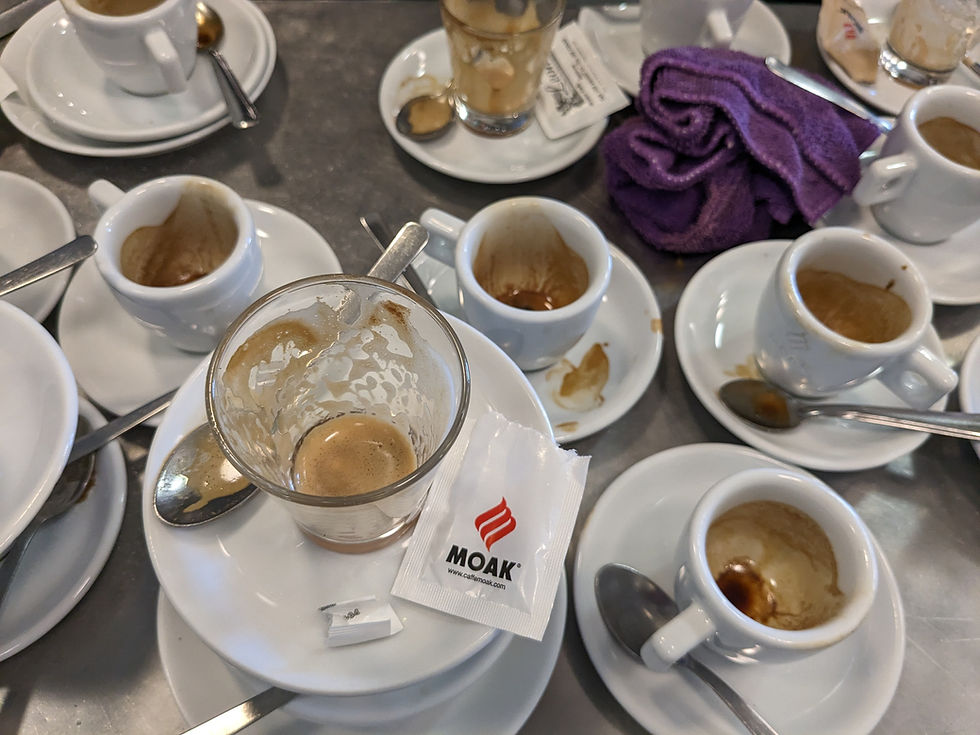
In Italy, coffee culture is a little different, but just as important (if not more so).
Let's Start with the Beverage
Italians mainline espresso like morphine. I know many who drink at least five cups a day, and surprisingly, they're not jittering all over the place. While espresso is strong, it actually has less caffeine than American coffee!
Italians only order cappuccino before 11 a.m. They believe that consuming milk later messes with digestion. I don't know that I agree with that, but still, I just stick to espresso if I'm drinking with an Italian!
What Being Offered Coffee Means
As I said, coffee (or, caffè) is social currency. Here, if someone invites you for a coffee, either at their home or at the local bar, it's an invitation into their world.
No, you won't sit down and talk for an hour. They'll throw back the espresso like a shot of buttery nipple while you're still blowing on yours to cool it down. The entire interaction may be over in minutes. But if you're invited, you're in.
When we first moved to Davoli, I almost always turned down offers for coffee. Being American, I always felt like I was in a rush to do something else. I didn't have time for coffee!
It took me a while to realize that I was perhaps hurting people's feelings when I turned down the offer. They were communicating that they wanted to spend time with me (if only 10 minutes) and to get to know me.
So I started saying yes.
Coffee Creates Friendships
Here's an example. There's an older woman named Agatha with whom Francesco is friends. Immediately after meeting me, she made me feel welcome. Whenever I passed her house, and she was outside, she invited me in.
"Vuoi un caffè?" she'd ask.
Finally, I felt bad for turning her down so much, so I said yes. She eagerly ushered me into her home, which was trapped in 1959. I sat at the ancient Formica table in her kitchen as she filled the Moka coffee maker and placed it on the gas stove.
I noticed a collection of black and white photos on the wall. I asked about them, and she told me about her family. She showed me a hand-embroidered fabric that had been passed down to her. Always eager to learn, I asked for more stories.
I left, not only filled with coffee and homemade cookies, but also with contentment. For a half-hour's worth of my time, I'd made an elderly woman happy and forged a new friendship.
And all for the price of a coffee!


Comments